
Winter Rental Property Prep in Edmonton: The Landlord’s October-Ready Checklist
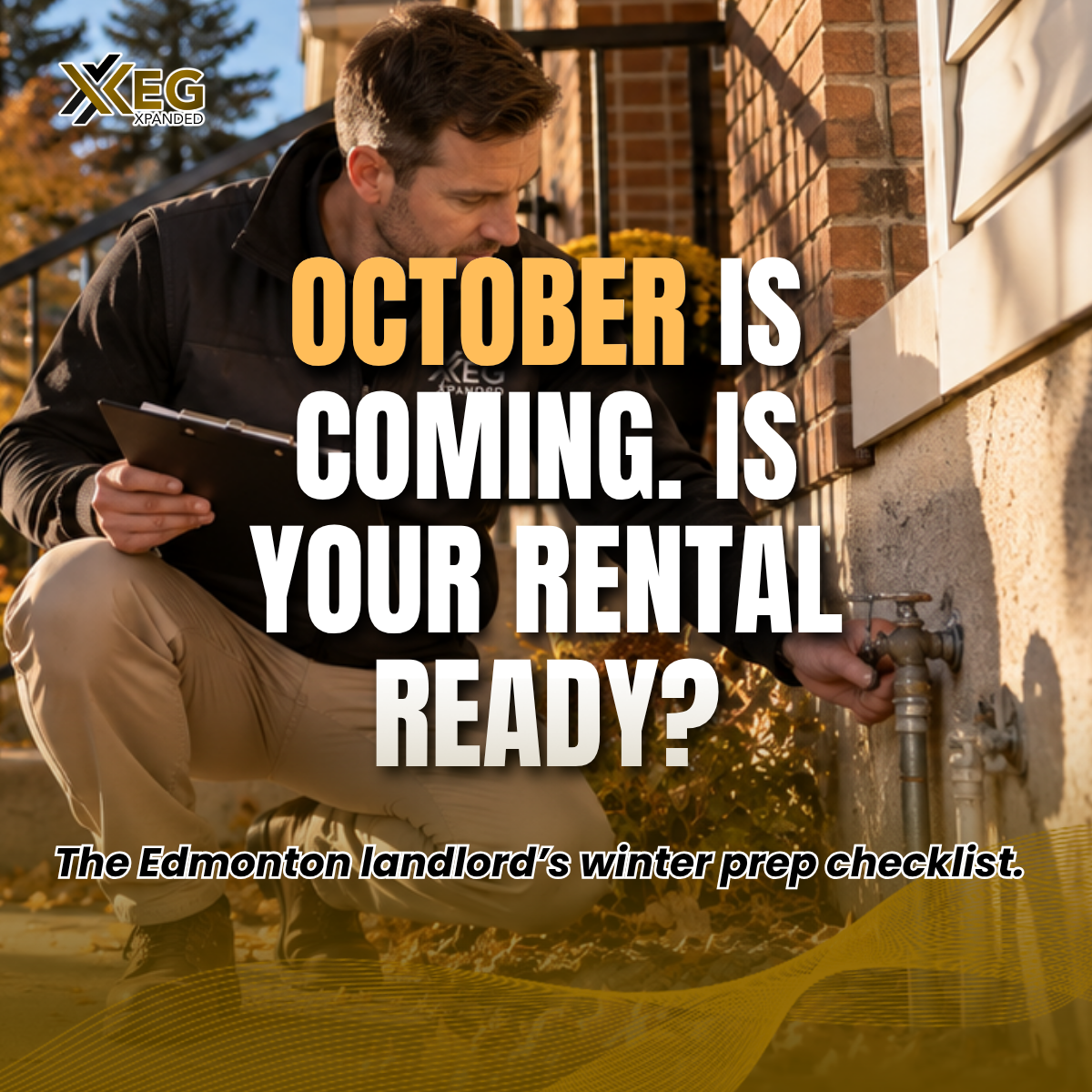
September Is Your Window. October Is Already Too Late.
Edmonton winters are not gentle. When the first hard freeze arrives — typically October but sometimes late September — any maintenance you haven’t done yet becomes a reactive emergency instead of a scheduled task. The difference in cost between those two categories is significant: a furnace serviced in September costs $150–$250. A furnace that fails at −30°C in January means an emergency call premium, a tenant in a cold unit, and an RTA obligation to respond within hours.
This checklist covers everything Edmonton landlords need to address before October. Work through it in order. The items at the top carry the highest risk if deferred.
Preventive maintenance in September is the single highest-return investment an Edmonton landlord can make in any given year.
Why Edmonton Winter Prep Is Different
Edmonton’s climate creates maintenance risks that most property management guides — written for more temperate markets — underestimate. Understanding the specific failure points helps you prioritize the checklist correctly.
| Edmonton-Specific Risk | What Happens Without Prep | Cost of Reactive Response |
|---|---|---|
| Furnace failure in January | Tenant in a cold unit. RTA obligation to respond within hours. Emergency call outside business hours. | $600–$1,500+ emergency repair premium vs. $150–$250 September service |
| Frozen or burst exterior pipe | Water damage to unit, walls, flooring, possibly the unit below. | $3,000–$15,000+ water damage repair. Insurance deductible. Tenant displacement. |
| Ice damming on roof edges | Water backs up under shingles. Ceiling and wall damage. Mould risk. | $5,000–$20,000 remediation vs. $300–$600 eavestrough cleaning and seal |
| Unprotected exterior hose bib | Pipe freezes behind the wall. Burst pipe in spring or mid-winter. | $1,500–$5,000 repair vs. $0 (shutoff and drain takes 10 minutes) |
| Icy walkways (no plan in place) | Tenant or visitor fall. Liability exposure. RTDRS risk for habitability. | Legal exposure that begins the moment ice forms and no mitigation is in place |
The October-Ready Checklist: Systems First
Work through this checklist in priority order. The top items carry the highest risk if missed. The bottom items are important but less likely to create emergency conditions.
Priority 1: Heating Systems
☐ Furnace service and tune-up — Book a licensed HVAC technician for a full annual service. Clean the heat exchanger, check the igniter, inspect the flue, test the thermostat. A $150–$250 service prevents a $600–$1,500+ emergency call.
☐ Replace furnace filter — If not done in the past 2–3 months, replace now. A clogged filter reduces efficiency and can cause the furnace to overheat and shut down — often at the worst possible time.
☐ Test all heat registers and radiators — Every room should have functional heat delivery. Cold spots in a habitable room are an RTA compliance issue in winter.
☐ Baseboard heaters (if applicable) — Bleed any air from hydronic baseboards. Test each unit individually before the cold arrives.
☐ Confirm backup heat source for emergencies — Know what the backup plan is if the primary heating system fails. Have your HVAC vendor’s emergency number current and accessible.
Priority 2: Water and Pipe Protection
☐ Shut off and drain all exterior hose bibs — This is the single most commonly missed winter prep item. Turn off the interior shutoff valve for each exterior hose connection and open the bib to drain residual water. Takes 10 minutes. Prevents a burst pipe.
☐ Insulate any exposed pipes in unheated spaces — Pipes in attached garages, crawl spaces, or exterior walls that aren’t well-insulated. Use foam pipe insulation sleeves — inexpensive and effective.
☐ Confirm the main water shutoff location and operation — You and your tenant should both know where it is and how to use it quickly in an emergency.
☐ Test the sump pump (if applicable) — Pour a bucket of water into the pit and confirm the pump activates and discharges. A failed sump pump in a spring thaw can cause significant basement flooding. September is the last reliable check window before freeze.
Priority 3: Building Envelope
☐ Inspect and clean all eavestroughs and downspouts — Remove leaf and debris accumulation from fall. Blocked eavestroughs cause ice damming and water intrusion. Downspouts should direct water away from the foundation — confirm extensions are in place.
☐ Inspect roof edges for existing ice dam damage — Look for lifted shingles, water staining on exterior fascia, or interior ceiling staining near exterior walls. Address before freeze.
☐ Re-caulk any gaps around windows, doors, and exterior penetrations — Edmonton winters create significant air infiltration through failed caulking. Cold drafts reduce tenant comfort and drive up heating costs. Use exterior-rated caulk rated for cold-temperature application.
☐ Inspect and replace door weatherstripping as needed — Exterior doors should seal fully. Hold a piece of paper against the closed door frame — if it slides out easily, the weatherstrip needs replacing.
☐ Check and seal any foundation cracks that appeared from last spring’s thaw — Water in a crack freezes, expands, and widens the crack. Address before the freeze cycle begins.
Priority 4: Mechanical and Safety Systems
☐ Test all smoke detectors — Replace batteries in every battery-operated unit. Test the alarm function. If any detector is over 10 years old, replace the unit entirely.
☐ Test all carbon monoxide (CO) detectors — Alberta building code requires CO detectors near sleeping areas in homes with fuel-burning appliances. Test all units and replace batteries. CO risk increases in winter when buildings are more tightly sealed.
☐ Inspect and clean the dryer vent — A blocked dryer vent is a fire risk year-round, but lint accumulation accelerates in winter when drying loads increase. Clean the full exterior vent run annually.
☐ Check the hot water heater — Inspect the temperature and pressure relief valve. Confirm the thermostat is set to 60°C (140°F) to prevent Legionella growth without scalding risk. Drain sediment from the tank if not done in the past year.
☐ Inspect the fireplace or wood stove (if applicable) — Have the chimney swept annually by a certified professional. Confirm the damper seals fully when closed. Inspect the firebox for cracks.
Priority 5: Exterior and Walkways
☐ Establish a snow and ice management plan — Who is responsible for clearing walkways, steps, and driveways — landlord or tenant? This must be clearly stated in the lease. Document the plan in writing before the first snowfall.
☐ Stock sand or ice melt in an accessible location — A bag of sand or appropriate ice melt product should be on-site and accessible to whoever is responsible for exterior maintenance.
☐ Inspect all exterior steps and handrails — Loose or deteriorating steps and handrails become serious liability issues when icy. Repair before the first freeze.
☐ Check outdoor lighting — Shorter days mean tenants arrive home in the dark. Ensure all exterior lighting is functional — entry, parking, and any pathway lighting.
☐ Confirm the garage door operates correctly (if applicable) — Garage door mechanisms can fail in extreme cold. Lubricate hinges, rollers, and the drive mechanism with a cold-rated lubricant.
Priority 6: Documentation
☐ Photograph the exterior condition of the property before the snow arrives — Date-stamped fall exterior photos establish the pre-winter condition baseline. Useful for insurance claims, deposit disputes at lease-end, and maintenance tracking.
☐ Update your emergency contact list for the property — Current HVAC vendor, plumber, electrician, and locksmith — all with after-hours lines confirmed.
☐ Confirm your tenant has your emergency contact information — They should know who to call and when for heating failures, pipe issues, or other winter emergencies — and what qualifies as an emergency vs. a routine request.
What the RTA Requires in Winter
Alberta’s Residential Tenancies Act doesn’t have a specific “winter clause,” but the general obligation — to maintain the property in a condition fit for habitation — becomes significantly more demanding when the temperature drops. In practical terms:
• A heating failure must be addressed promptly. “Promptly” in a Canadian winter context is measured in hours, not days. Have an emergency HVAC contact before you need one.
• Walkway and access safety is a maintenance obligation. Ice on required access routes is a habitability and liability issue.
• A hot water failure is an urgent maintenance matter regardless of season, but particularly serious in winter when cold showers are a health concern.
Related: Full guide to landlord maintenance responsibilities in Alberta
YEG Xpanded’s Fall Inspection Program
Every property we manage goes through a documented fall inspection in September — before the season changes, before the freeze, and before anything becomes a reactive emergency.
• Documented walk-through: A written inspection report covering all systems and structural elements, with date-stamped photos, delivered to the owner.
• Priority flagging: Any items that need immediate attention are flagged separately from routine maintenance — so you know what can’t wait.
• Vendor dispatch: Flagged items are dispatched to our vetted Edmonton vendor network — licensed, insured, and with after-hours availability confirmed.
• Completion confirmation: Every item is confirmed complete with a follow-up note and invoice to your owner file.
• Winter emergency protocol setup: We confirm the emergency call chain for the property and ensure the tenant has current contact information before the first freeze.
If you’re managing your property yourself and the fall prep checklist above feels like a lot to coordinate alongside everything else — that’s exactly what our inspection program is built for.
Ask About Our Fall Inspection Program Before the Season Changes
The window to complete this work is September and early October. Once Edmonton’s first hard freeze arrives, reactive repairs replace proactive prep — at two to ten times the cost.
Ask About YEG Xpanded’s Fall Inspection Program Before the Season Changes
Visit yegxpanded.com or call us directly. Tell us about your property and we’ll walk you through what our fall inspection covers and how to get it scheduled before October.
Prevention costs a fraction of the emergency. Let’s make sure you’re on the right side of that math.
